
Linear Servo Motor Systems
Linear Servo Motor Systems
Terapec linear servo motor systems provide compact and reliable solutions for applications requiring linear motion, delivering high force output, precise positioning, and stable motion control.
High-Performance Linear Actuation
Linear servo motor systems deliver controlled force in both push and pull directions, ensuring high performance in applications that require precise motion. Advanced control algorithms and feedback systems enable accurate management of linear motion. With high bandwidth and low latency characteristics, the system rapidly adapts to dynamic load variations. Its stable control architecture ensures reliable and consistent performance, particularly in applications requiring precise positioning.
Terapec linear servo solutions are optimized for space, aerospace, and precision industrial applications, as well as mechanisms requiring high force output, precise stroke control, and reliable linear motion.
With force options of 1000 N, 2000 N, and 5000 N, these systems provide flexible solutions tailored to a wide range of application requirements.
1000N - 5000N
Force Range
8Hz - 15Hz
Bandwidth
0.1 mm - 0.3 mm
Positioning Accuracy
Aerospace & Defense
Application-Ready Design
Let’s find the optimal linear servo solution for your application.
1000N Servo System
The 1000N servo system is designed for linear motion applications requiring low to medium force, offering a compact structure and high-precision control capability.
It delivers reliable performance in systems that demand accurate positioning, thanks to its high control accuracy and stable motion characteristics.
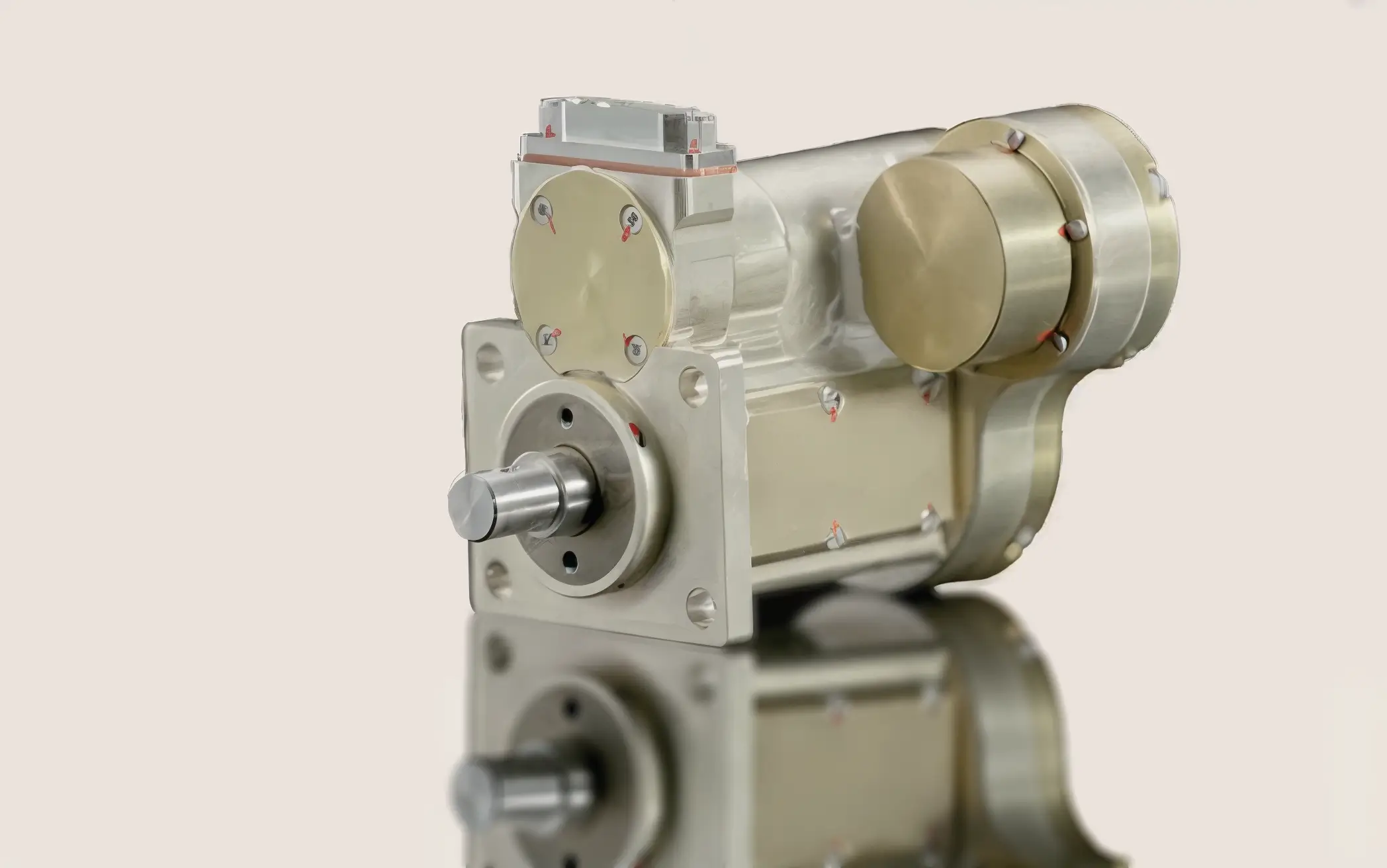
1000N Nominal Force
2000N Maximum Force
0.62 kg Weight
0.1 mm Control Accuracy
Compact and lightweight design
Its compact housing structure enables easy integration in space-constrained applications, providing flexibility and advantages in system design.
High precision
Ensures repeatable and stable linear motion with a control accuracy of 0.1 mm.
Dynamic performance
Delivers low-latency control with a bandwidth of ≥ 8 Hz and a speed of 10 mm/s.
1000N Servo System Technical Specifications
| Control / Power Voltage | 28V / 28V |
| Communication Bus | RS422 / CAN |
| Rated Thrust | 1000N |
| Maximum Thrust | 2000N |
| Rated Speed | 10mm/s |
| Operating Range | ±8mm |
| Accuracy | 0.1mm |
| Bandwidth | ≥ 8 Hz |
| Weight | 0.62 kg |
| Dimensions (mm) | 70 × 76 x 68 |
| Application Areas | Space Exploration, Aviation and Space |
2000N Servo System
The 2000N servo system is optimized for applications requiring medium to high force, featuring high speed capability and an extended stroke range.
With its high bandwidth and fast response time, it delivers stable and reliable performance in dynamic systems.
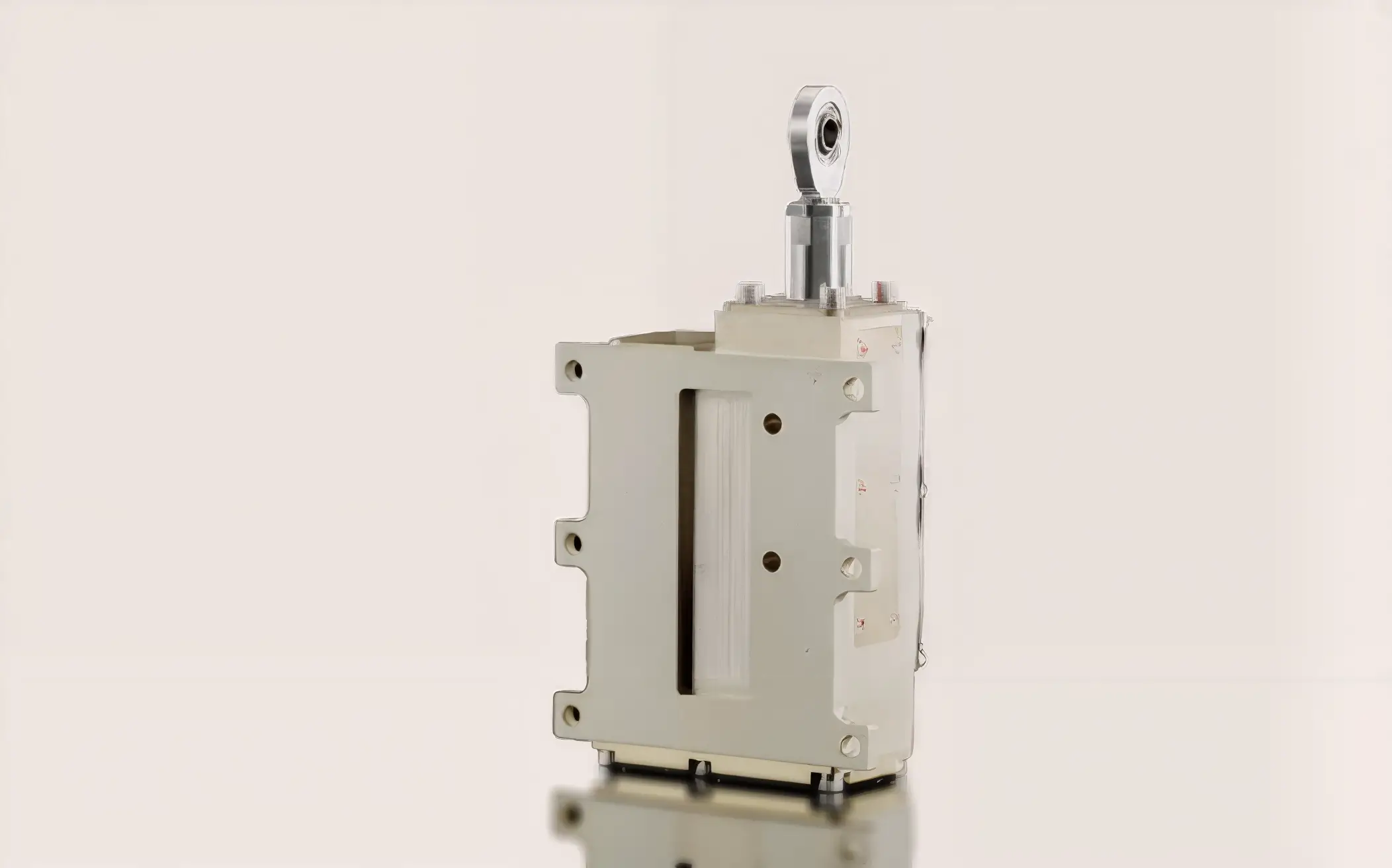
2000N Nominal Force
3500N Maximum Force
1.7 kg Weight
0.3 mm Control Accuracy
High-speed performance
Provides an effective solution for applications requiring dynamic linear motion with a speed of 150 mm/s.
Wide operating range
Adapts to various motion requirements with a ±30 mm stroke capacity.
High bandwidth
Ensures fast and stable control characteristics with a bandwidth of ≥ 15 Hz.
2000N Servo System Technical Specifications
| Control / Power Voltage | 28V / 56V |
| Communication Bus | RS422 / CAN |
| Rated Thrust | 2000N |
| Maximum Thrust | 3500N |
| Rated Speed | 150mm/s |
| Operating Range | ±30mm |
| Accuracy | 0.3mm |
| Bandwidth | ≥ 15 Hz |
| Weight | 1.7 kg |
| Dimensions (mm) | 98 × 57 × 20 |
| Application Areas | Aerospace, Marine |
5000N Servo System
The 5000N servo system is designed for heavy-duty applications with its high force capacity and robust mechanical structure.
It provides reliable and long-lasting operation in mission-critical tasks thanks to its stable control performance and high force output.
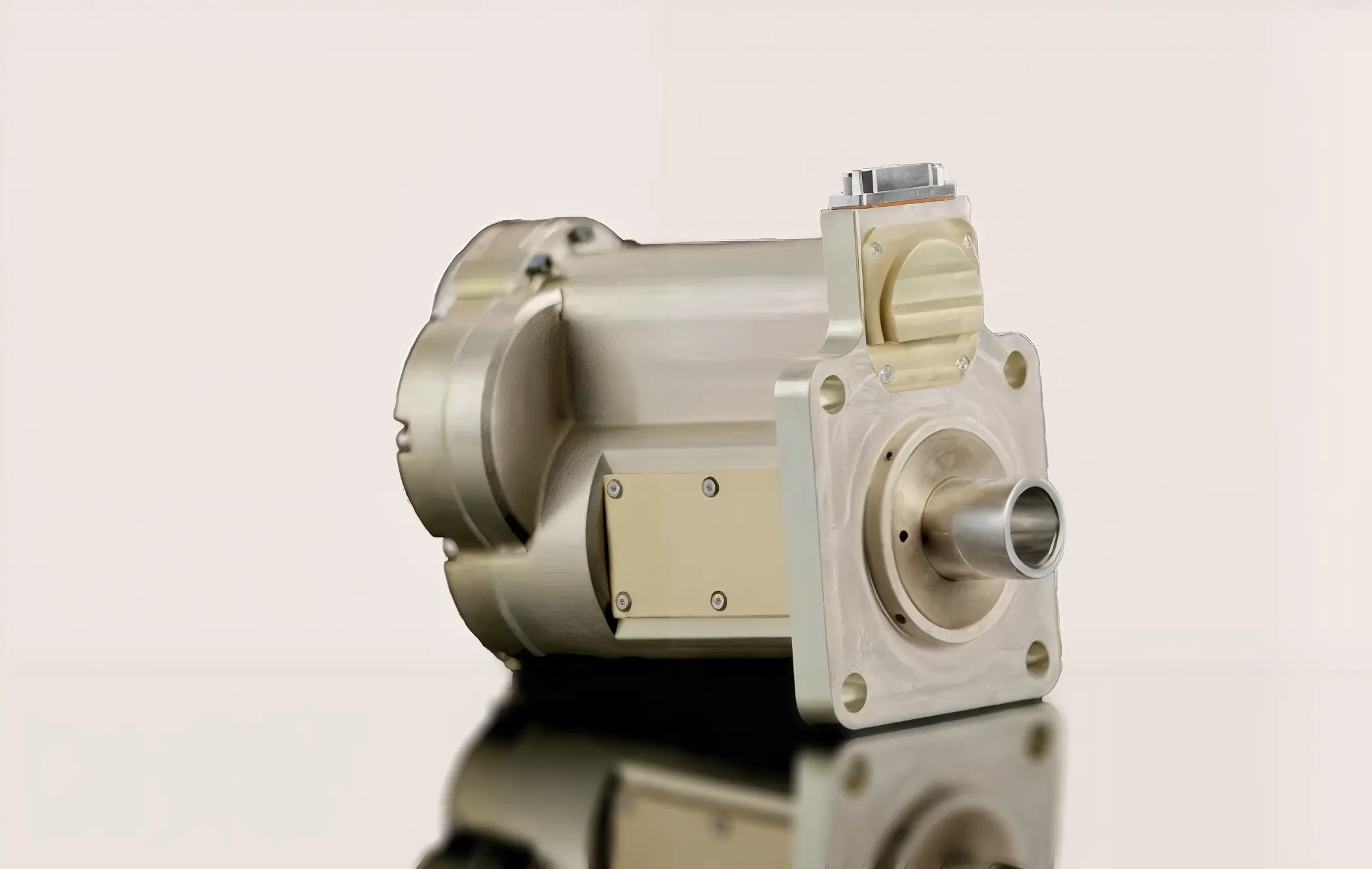
5000N Nominal Force
8000N Maximum Force
2.2 kg Weight
0.1 mm Control Accuracy
High force capacity
Delivers reliable performance in controlling heavy loads with 5000N nominal and 8000N maximum force.
Precision control
Ensures stable motion in high-accuracy applications with 0.1 mm positioning precision.
Robust structure
Optimized for long service life under harsh environmental conditions.
5000N Servo System Technical Specifications
| Control / Power Voltage | 28V / 28V |
| Communication Bus | RS422 / CAN |
| Rated Thrust | 5000N |
| Maximum Thrust | 8000N |
| Rated Speed | 40mm/s |
| Operating Range | ±15mm |
| Accuracy | 0.1mm |
| Bandwidth | ≥ 8 Hz |
| Weight | 2.2 kg |
| Dimensions (mm) | 80 × 80 × 147 |
| Application Areas | Space Exploration, Aviation and Space |
Applications
Aerospace Systems
Provides precise positioning and reliable actuation in flight control surfaces, landing gear mechanisms, and space platforms. Delivers stable performance under harsh environmental conditions.

Marine and Offshore Applications
Ensures reliable force control and durability in mechanisms operating under high humidity, vibration, and saline environments.
Industrial Automation and Test Systems
Offers high accuracy and repeatability in precision positioning, force-controlled testing applications, and automated production lines.
Custom Engineering and Mobile Platforms
With its compact and integrated structure, it provides flexible solutions for robotic systems, defense applications, and specialized mechanical designs.
How Does a Linear Servo Motor System Work?
1. Linear Motion Generation
Linear servo motor systems convert rotational motion into linear motion through mechanical transmission elements such as screws, gears, or linear actuator mechanisms. This structure enables the system to generate controlled force in both push and pull directions.
2. Power Supply and Communication Architecture
These systems typically operate with 28V or 56V supply voltage and support RS422 and CAN communication protocols. This enables high-speed and stable data exchange with higher-level control systems.
3. Precision Positioning and Control
Position feedback in linear servo systems is provided by high-resolution sensors. This allows precise positioning accuracy in the range of 0.1 mm to 0.3 mm. With closed-loop control algorithms, the system reaches the target position with high accuracy and maintains it reliably.
4. Force and Dynamic Performance Management
Linear servo motors are designed to operate at different force and speed levels depending on application requirements. Thanks to high bandwidth, they respond quickly and maintain stable performance under varying load conditions.
Frequently Asked Questions
What Is a Linear Servo Motor System?
Linear servo motor systems are actuation solutions designed for applications requiring linear motion, providing precise positioning and controlled force generation. They perform push and pull movements with high accuracy.
What Is the Difference Between a Linear Servo Motor and a Rotary Servo Motor?
Rotary servo motors produce angular motion, while linear servo motors produce linear motion. Linear systems are particularly preferred in stroke-controlled applications.
What Force Ranges Are Available for Linear Servo Motors?
Depending on the application, solutions are available starting from 1000N up to 5000N and beyond.
Which Communication Protocols Do Linear Servo Motor Systems Support?
It generally supports RS422 and CAN-based communication infrastructure. This enables easy integration with different control systems.
What Is the Positioning Accuracy of Linear Servo Motor Systems?
Advanced feedback systems enable precise positioning within the range of 0.1 mm to 0.3 mm. This value may vary depending on the system design.
In Which Industries Are Linear Servo Motors Used?
They are widely used in aerospace, aviation, defense, and precision industrial automation applications.
Why Are Linear Servo Motor Systems Suitable for Critical Applications?
In critical applications, high force output, precise position control, and stable operation are essential.
- Linear servo motor systems meet these requirements through:
- High force capacity
- Precise stroke control
- Stable and repeatable motion
- Mechanically robust structures suitable for harsh environments
These features make them a reliable actuation solution, particularly in aerospace and aviation applications.
Which Linear Servo Motor Model Is Suitable for My Application?
Selecting the right linear servo motor depends on your application’s technical requirements. The following criteria should be considered:
- Required force (N) and speed values
- Stroke length (operating range)
- Supply voltage and communication infrastructure
- Space and weight constraints
- Operating environmental conditions
- Desired positioning accuracy
Accurate analysis of these parameters directly affects system performance and long-term reliability.